WideVista
WideVista
1

EXPLORE WHENEVER YOU WANT

Find your way through old space routes

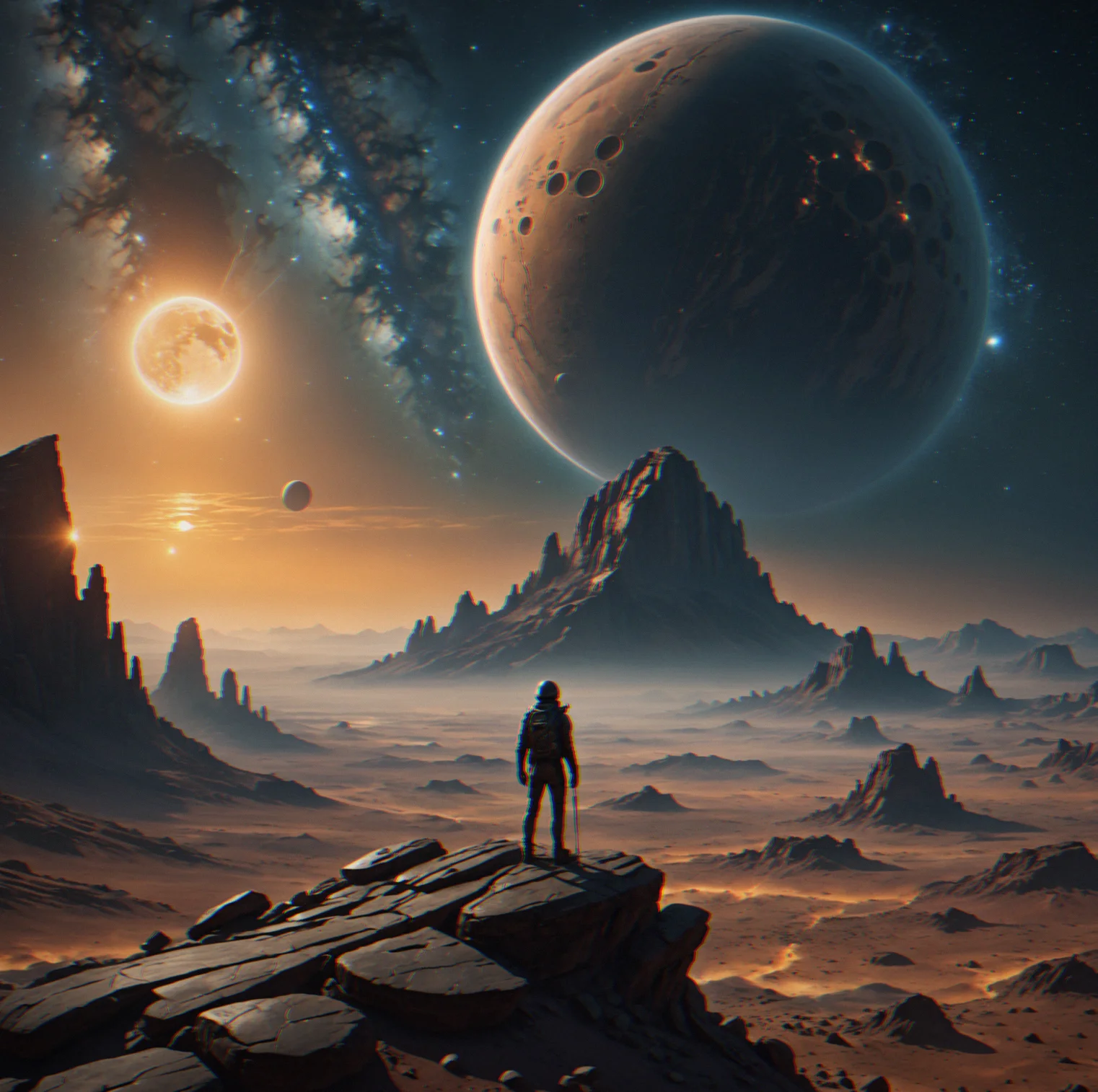
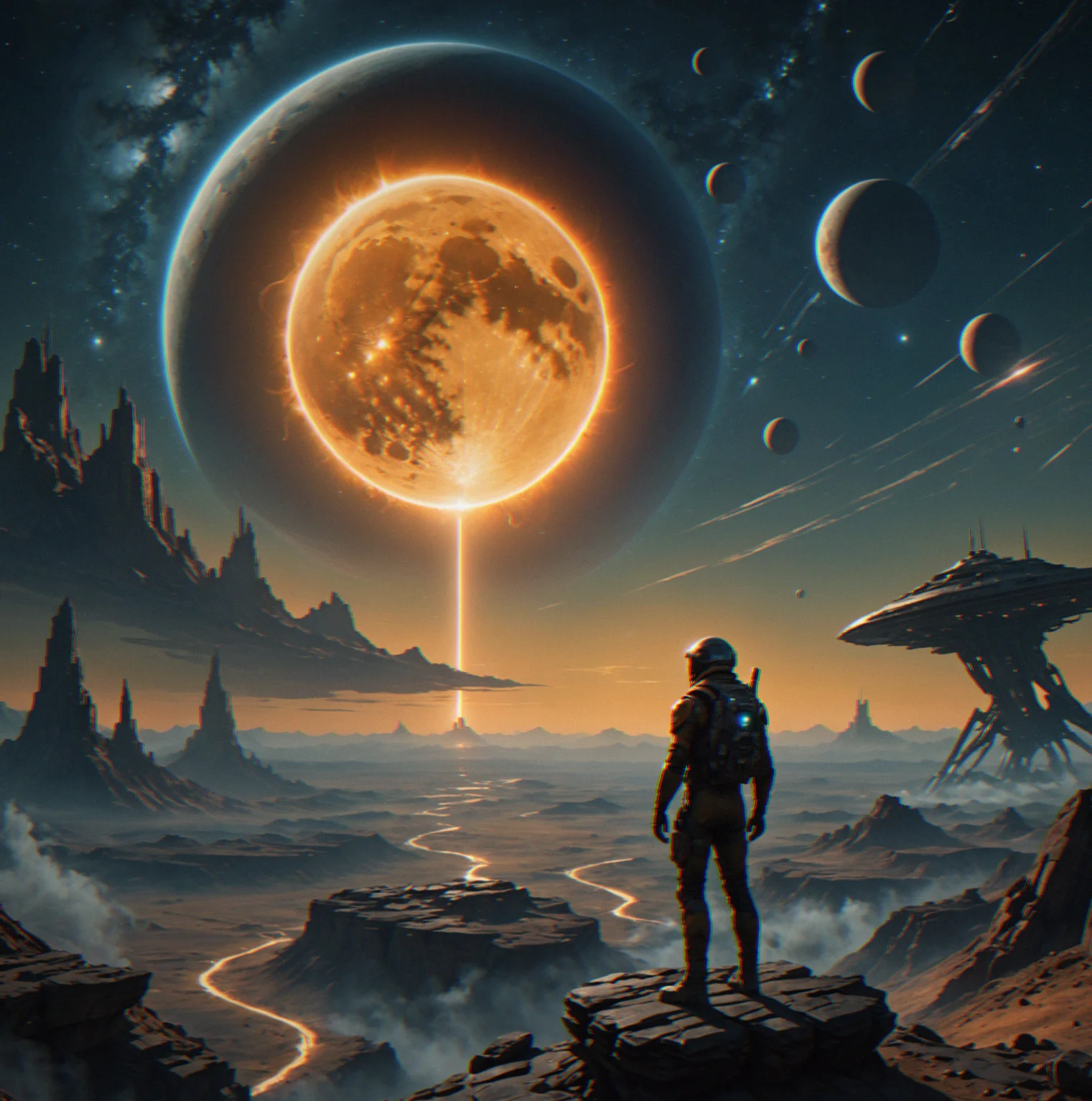
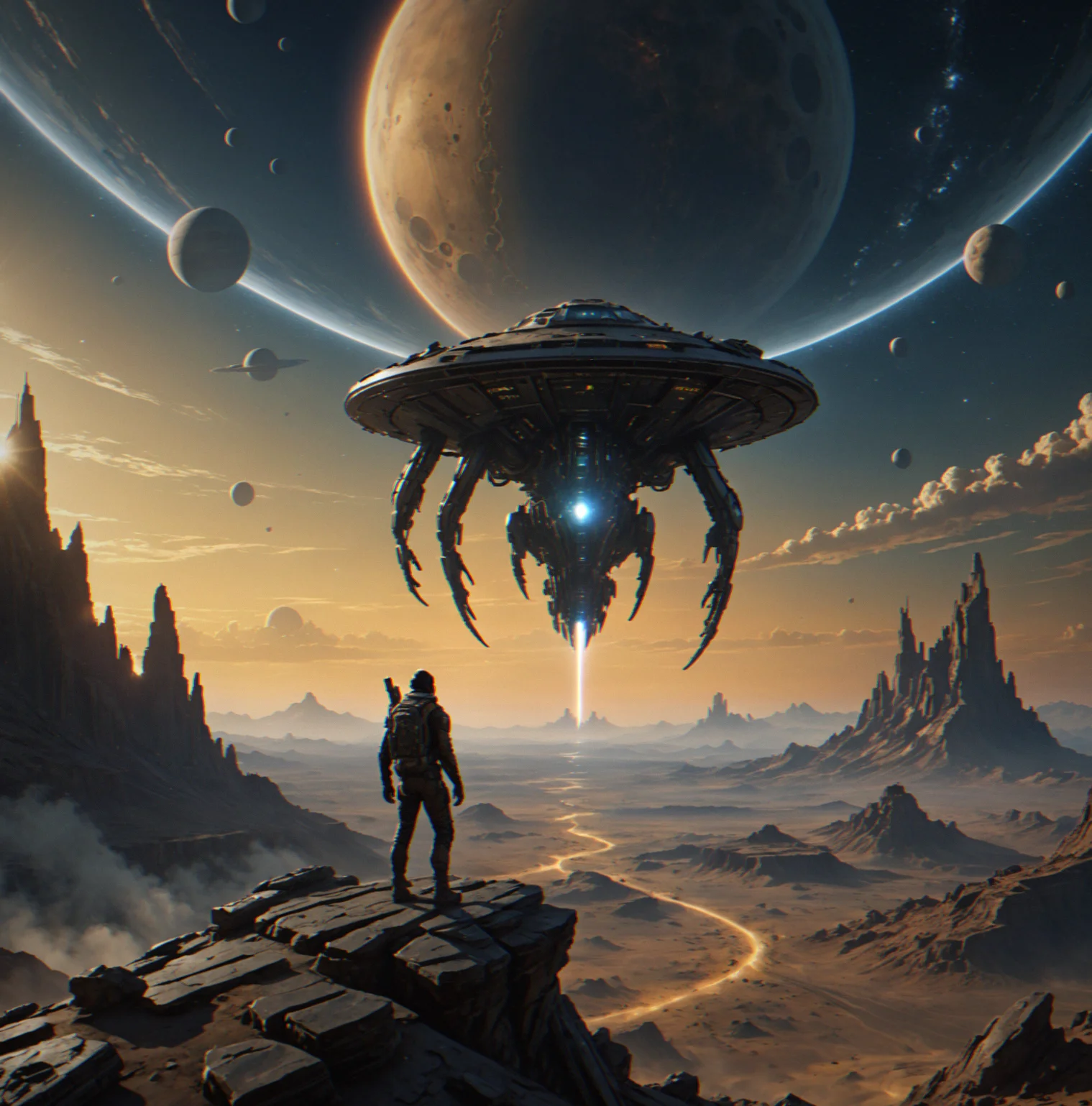
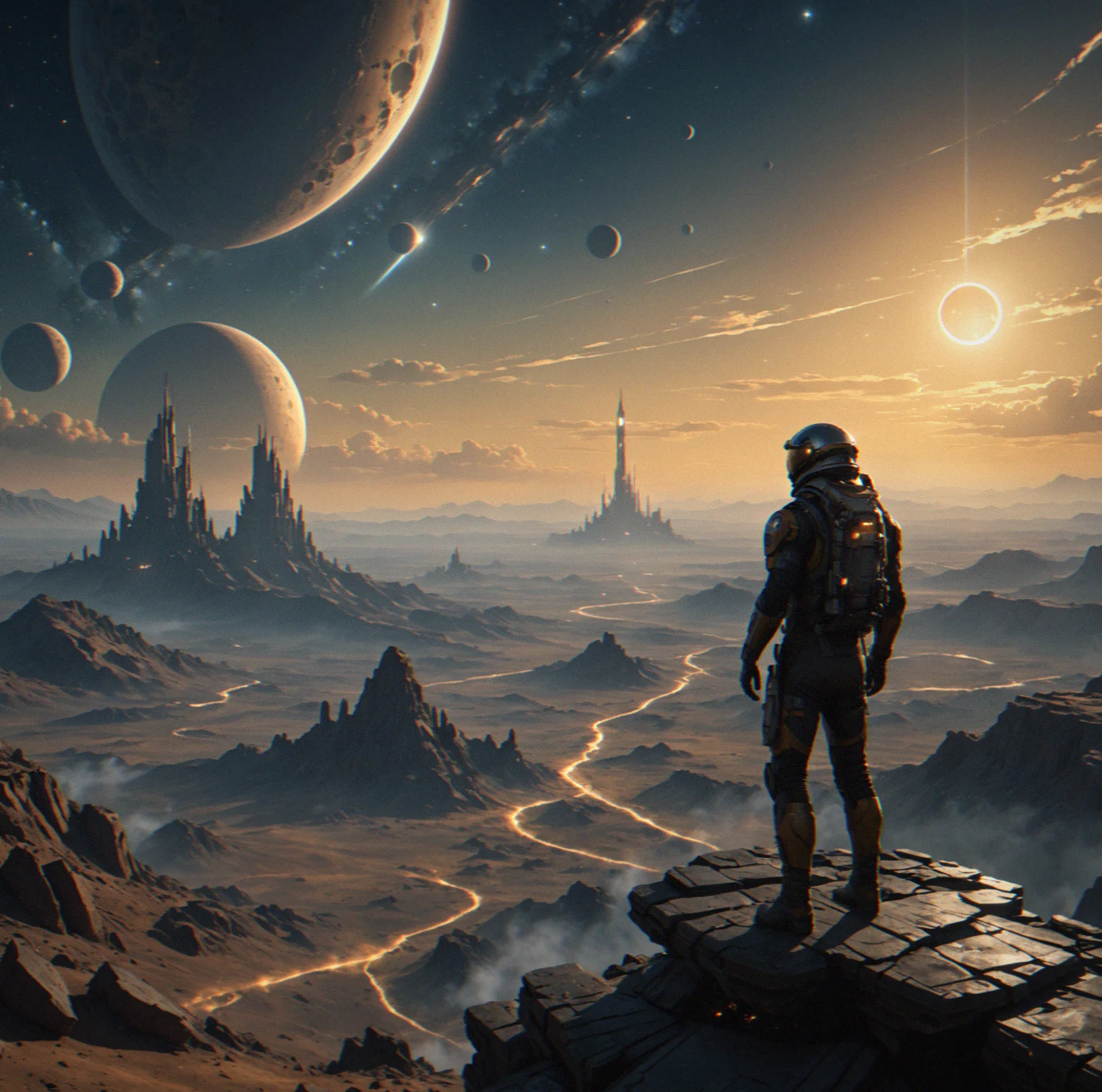
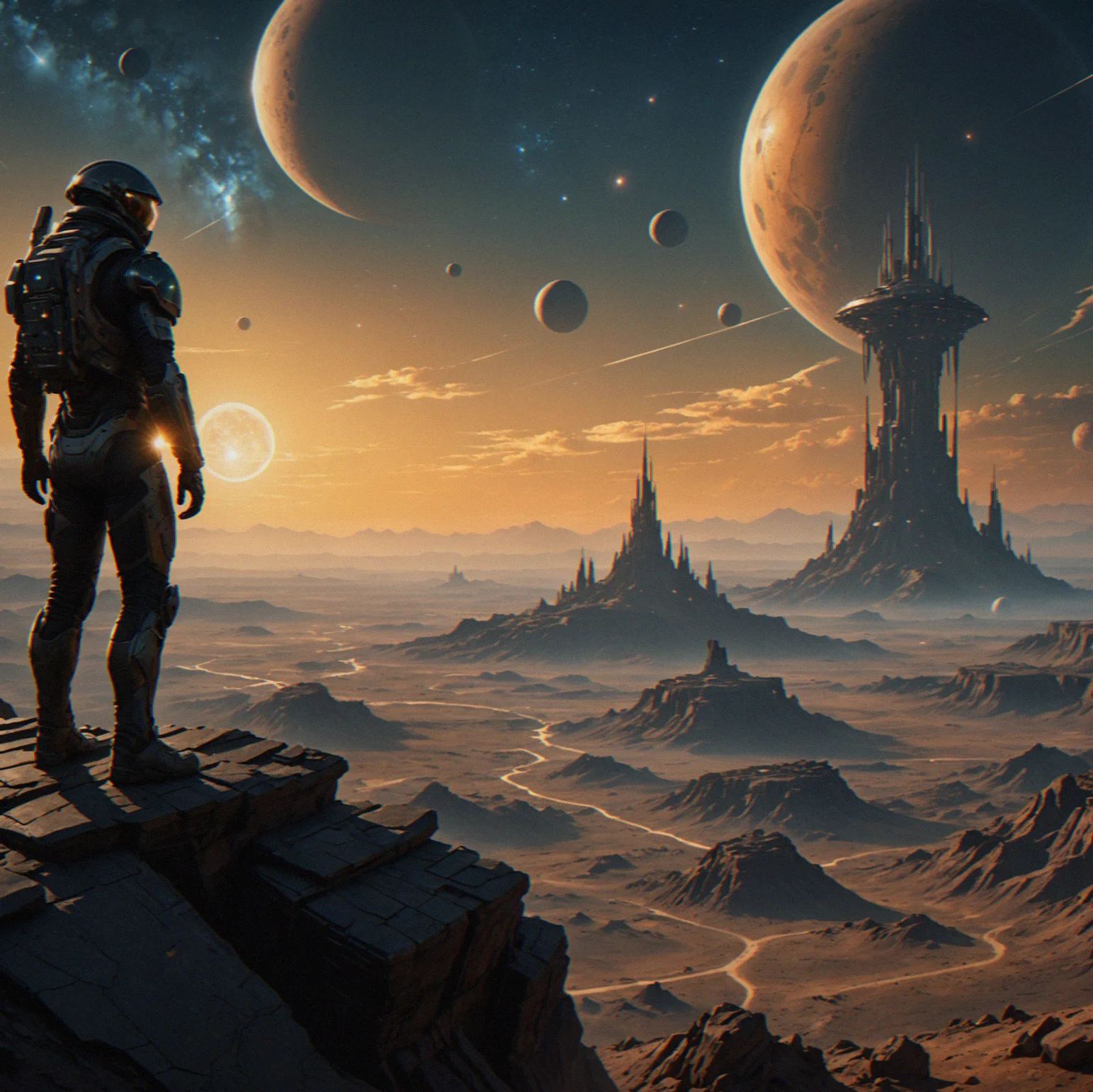
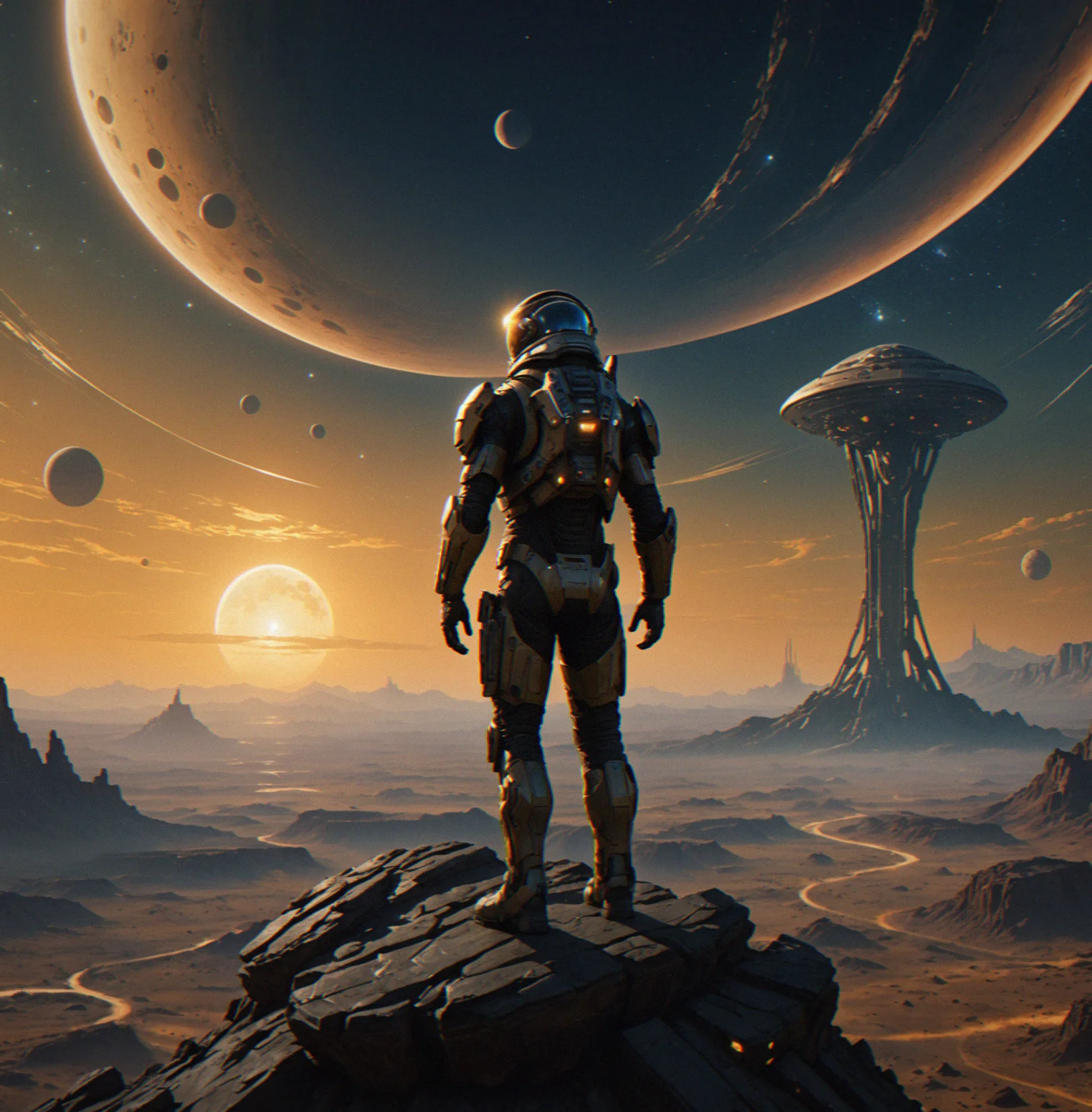
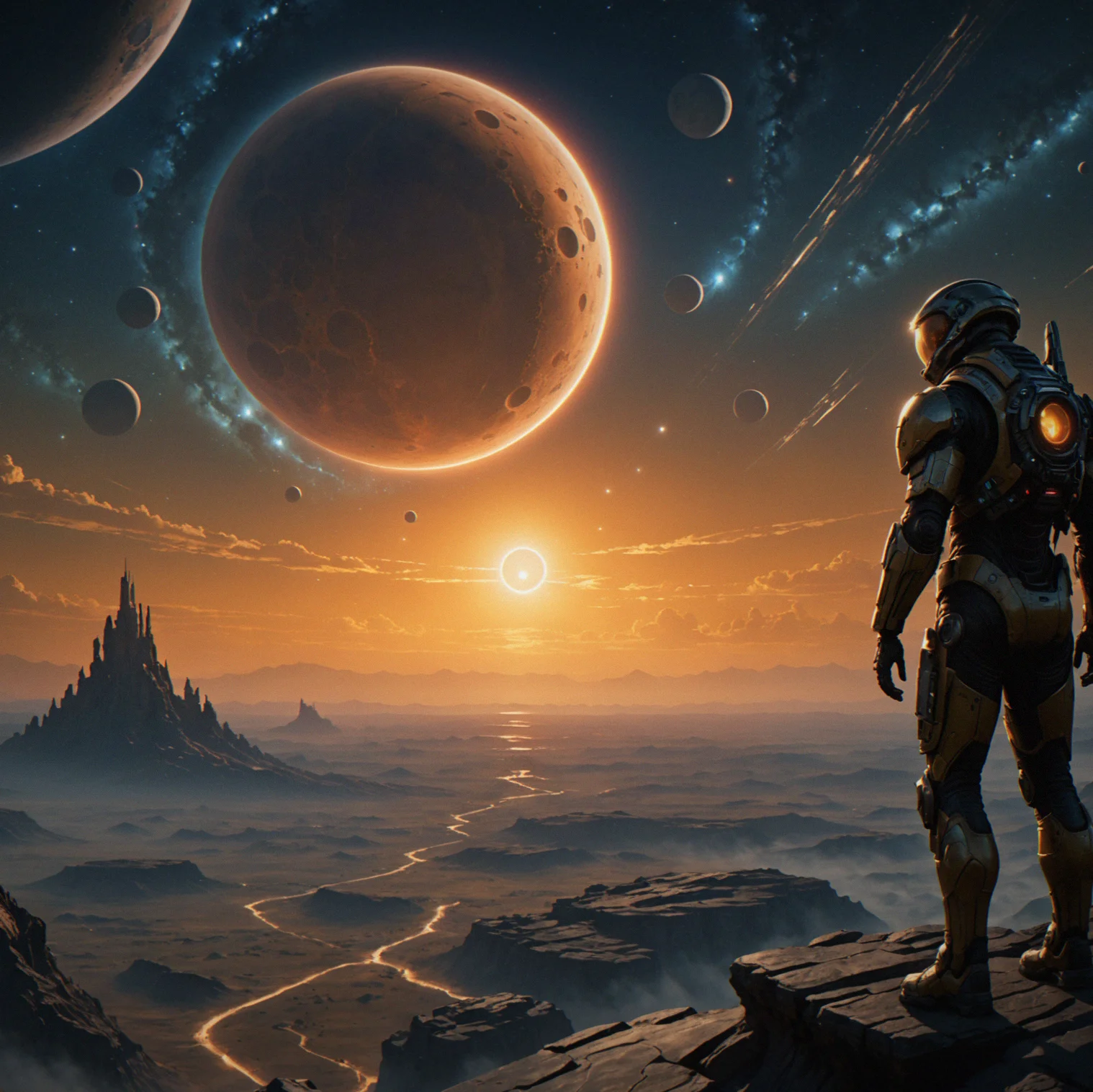
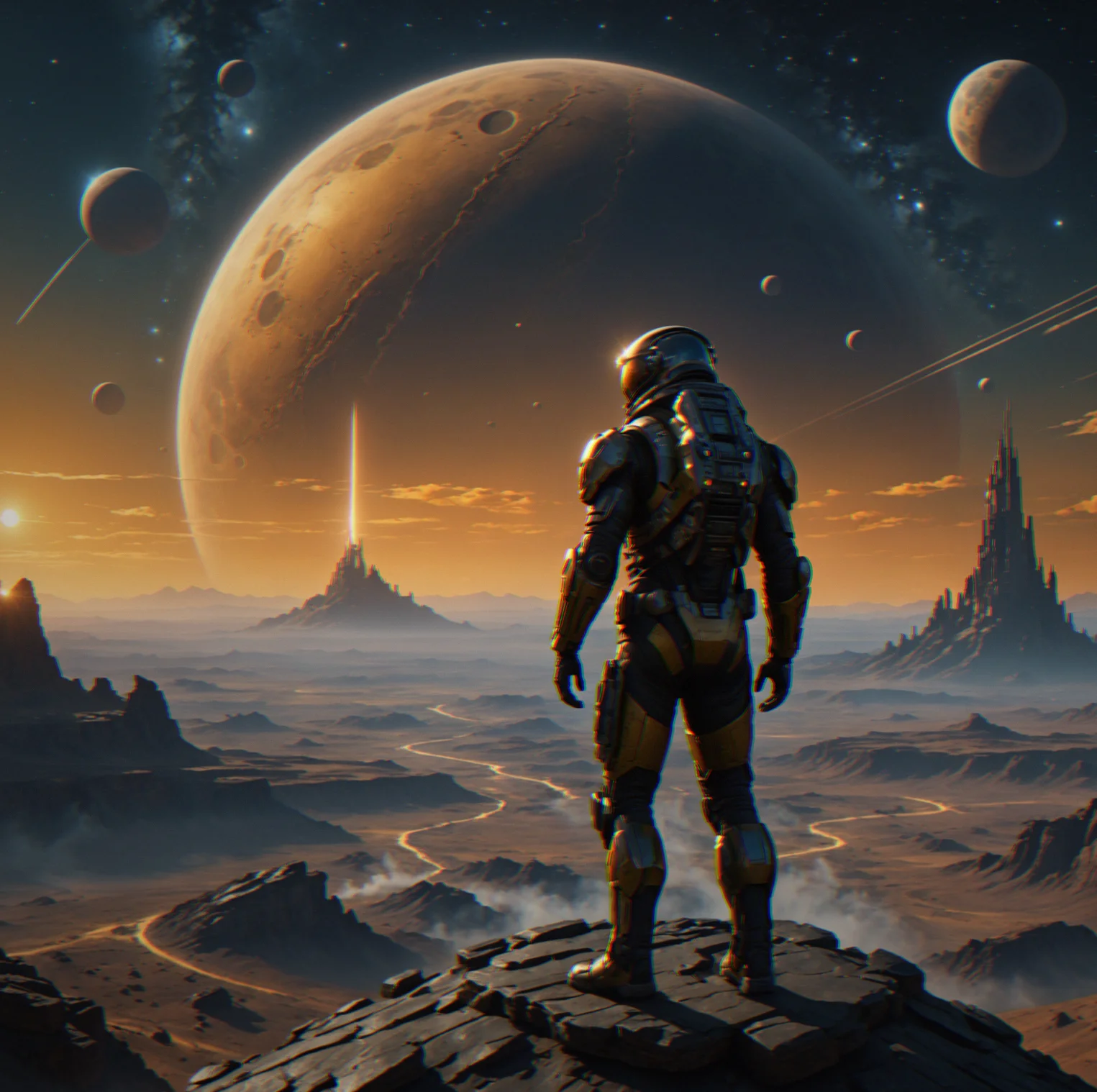
Someone alone on a huge planet with giiant rocks above them and stars everywhere

A space game about exploring. No rush, no combat, just discovery.

WideVista drops you on planets that feel Real but were built by hand. You move around freely, turning on Beacons as you go. That's it. No fighting, no timers, no survival mechanics. The planets are massive compared to you and they only show you what you've earned by looking. Atmosphere and storytelling happen at your speed, not the game's.

CORE MECHANIC

Beacon restoration as a quiet anchor

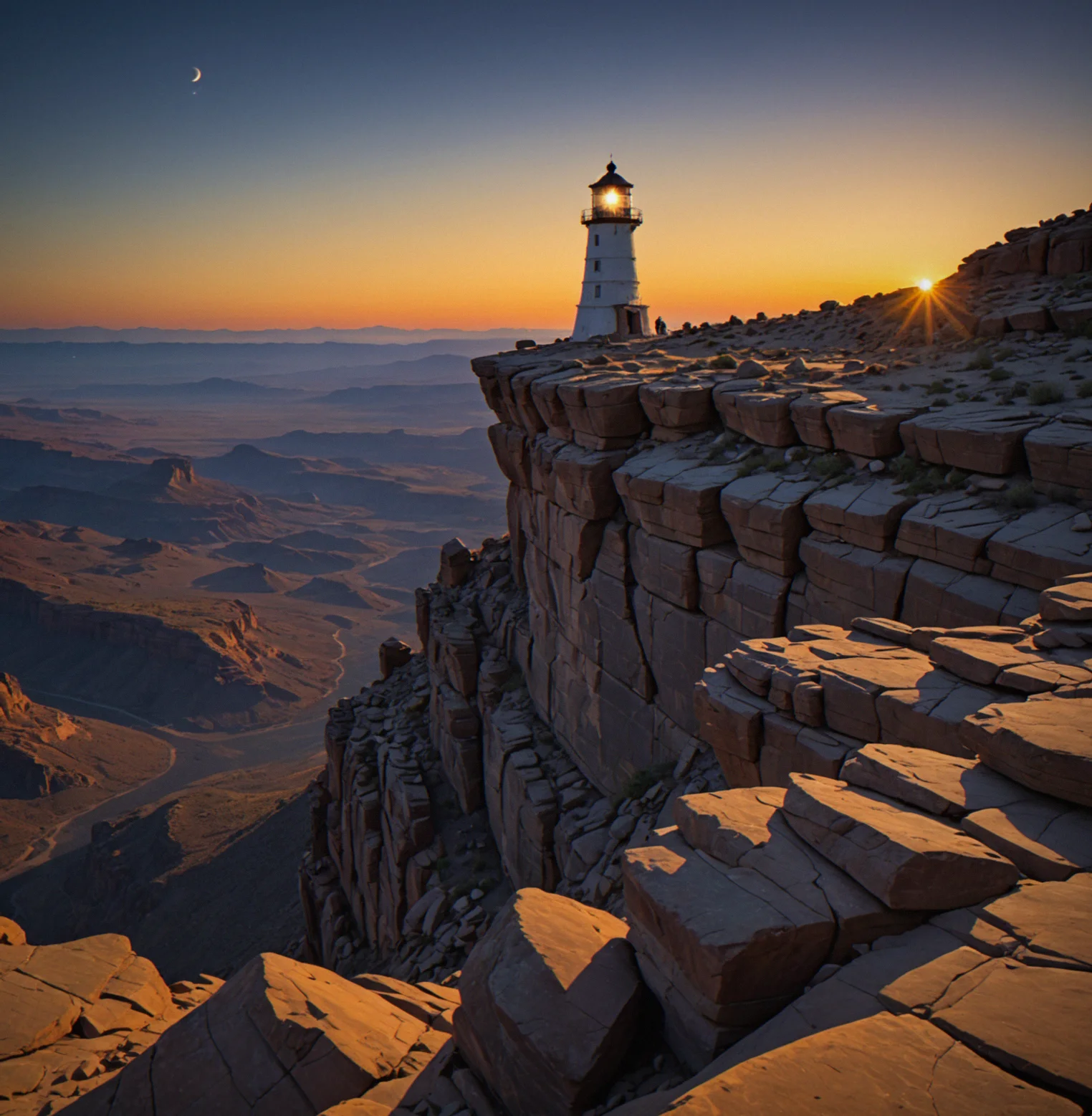
An old beacon structure giving off a soft glow on bare rock as the sun goes down

WideVista doesn't push you to hurry. Most space games make you scramble for resources or watch timers tick down, but this one lets you breathe. You walk across planets looking for old beacons—equipment left behind by people who came before—and turn them back on. When you restore one, it unlocks routes through the orbital network so you know where to go next. The whole thing feels intentional, almost like meditation, except you need to actually pay attention to what the landscape is telling you. The beacons become anchors in a bigger exchange between you and the place itself.

Hunting for a beacon takes real looking and patience. You watch the terrain for structures that don't belong, track odd geological features, gather hints from kilometers of empty rock. Once you find it and get it working, it sends out updated star charts and trajectory data. That one loop—find, restore, move on—is basically the whole game. No progress meters. No ability trees. Just getting smarter about how the system functions and wondering why someone built it in the first place.

47
beacons spread across the navigable orbital network
a dozen
procedurally-generated planetary biomes mixed with hand-built landmarks
8–14 hours
how long it takes if you're not rushing
NAVIGATION SYSTEM

Chart your own path through the orbits

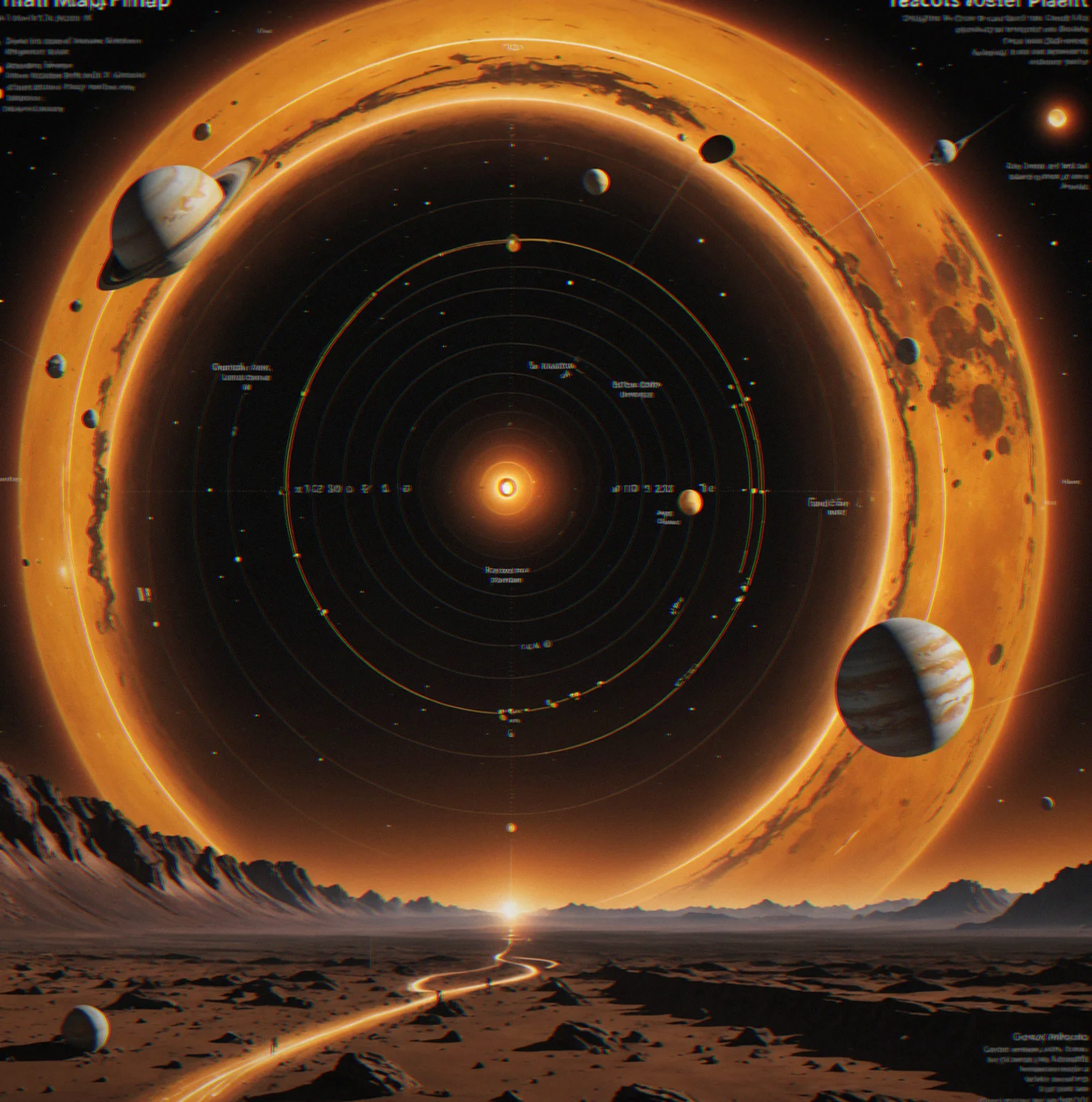
Orbital map showing trajectories between planets with beacon locations glowing in soft amber

WideVista doesn't hand you a destination or force you down one route. You land on a planet, look up at the sky, and pick which orbital arc to follow based on what you see and what the beacons are telling you. The game shows you 6 connected celestial bodies within range, each with landing zones, landmark clusters, and beacon networks. So you're constantly making small choices: should I restore beacons here or chase that unknown orbital path that's been pulling at me since I touched down.

Planning routes means juggling the hard numbers—delta-v costs, orbital windows, fuel left—and the environmental clues scattered through each location. A crater might show where earlier explorers built camps. A fault line could signal something worth checking out. Nothing's off-limits. You could visit all 6 bodies in an order that feels right to your story, or jump around chasing whatever caught your eye from orbit.

The gap between what the game nudges you toward and what you actually do—that's the thing.

6
WORLD DESIGN

Landscapes built to make you feel small

WideVista planets use a mix of procedural generation and hand-placed landmarks. The procedural systems handle geology and weather patterns, but the real anchors are the ones someone actually placed—rock formations, canyons, geological oddities. It makes the world feel intentional, not random. The scale is the whole point. A single vista stretches across kilometers of your field of view. Terrain features rise hundreds of meters above the landing zone. You're about 2 meters tall. Standing at the base of a canyon wall or beneath a stone arch, the geology presses down on you.

6
explorable planets, each with its own geological character
2,400+
meters of elevation swing on a single surface
19
different biome types scattered across the system
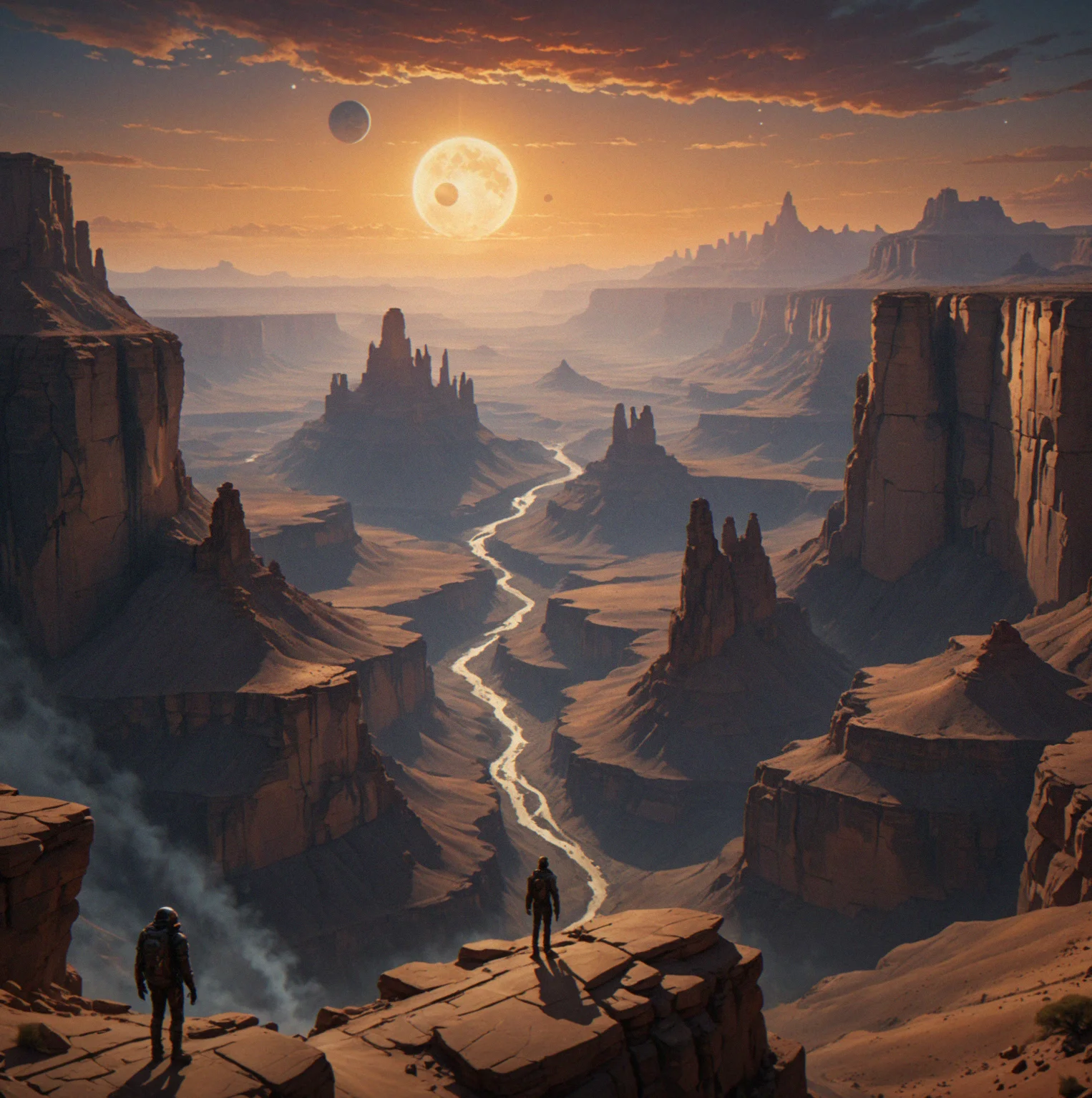
A vast canyon with towering cliff faces and mountains in the distance. A tiny figure stands at ground level so you can see the scale.

Procedural generation keeps things varied. Each playthrough has different crater distributions, lava flows, different crystal formations scattered around. But the handcrafted layer is what stops it from feeling like chaos. Five major landmark clusters per planet, hidden alcoves with beacon structures tucked into them. You start to develop intuitions about where to look. The terrain teaches you patterns. Then you crest a ridge and find something you didn't expect, and that moment sticks with you.

Procedural-Handcrafted Hybrid

Procedural systems generate geological diversity. Handcrafted waypoints and landmarks give you a sense that discovery is deliberate, not just random noise.

Scale That Contextualizes

Terrain featurez tower hundreds of meters. Your character becomes a speck. You have to look up, think carefully, move deliberately.

Environmental Storytslling Through Topology

Rock formations, erosion patterns, how the geology fits together. They hint at planetary history without spelling anything out.

What you find out there

Things unfold as you go. Light up a beacon and the map opens up. New places appear. Some you recognize. Others are bigger and stranger than you expected.

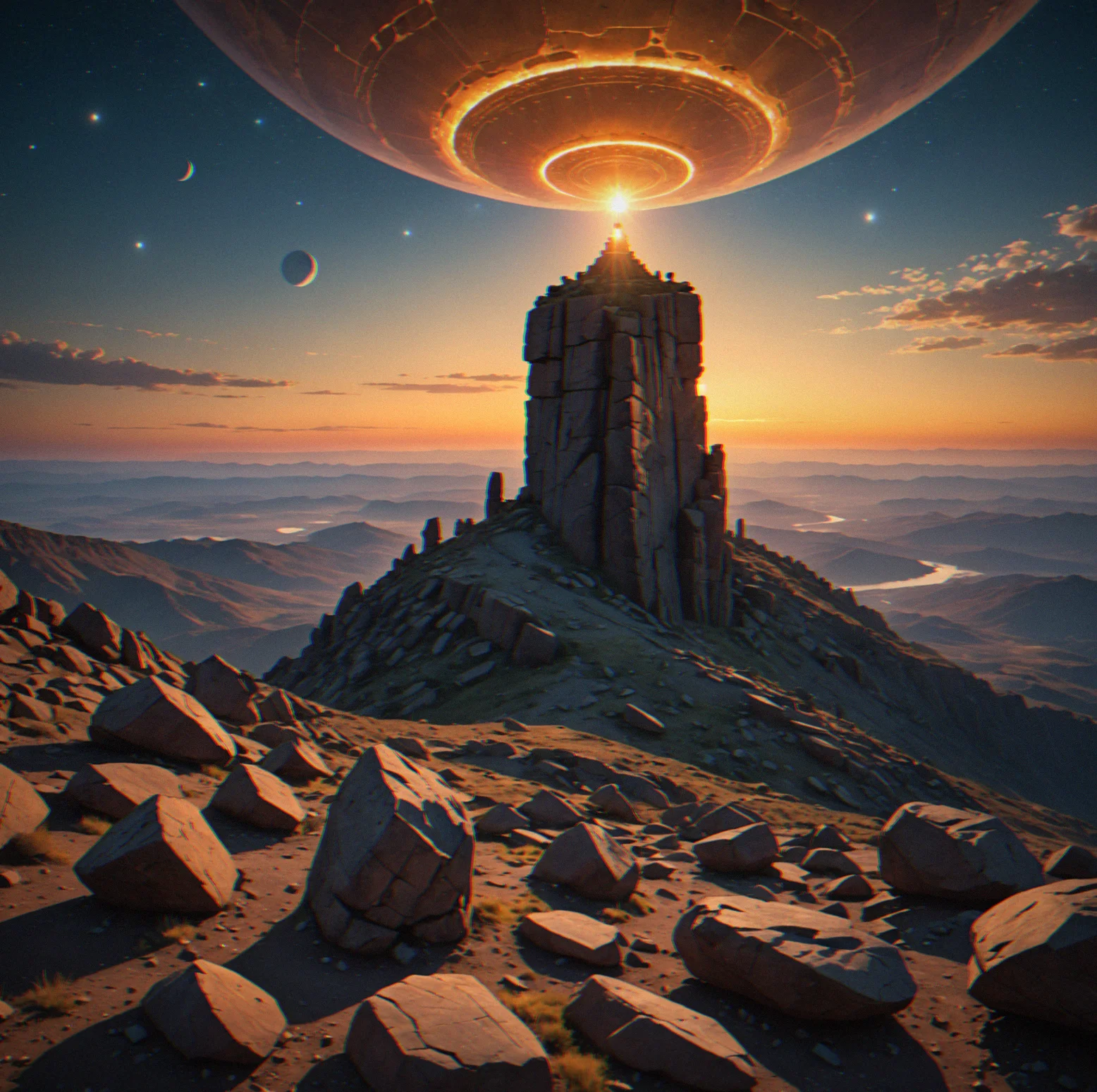
An old beacon sits on a rocky ridge at sunset with ancient patterns carved into it and crystals scattered around the base

Fixing beacons tells you both how they work and where they came from.

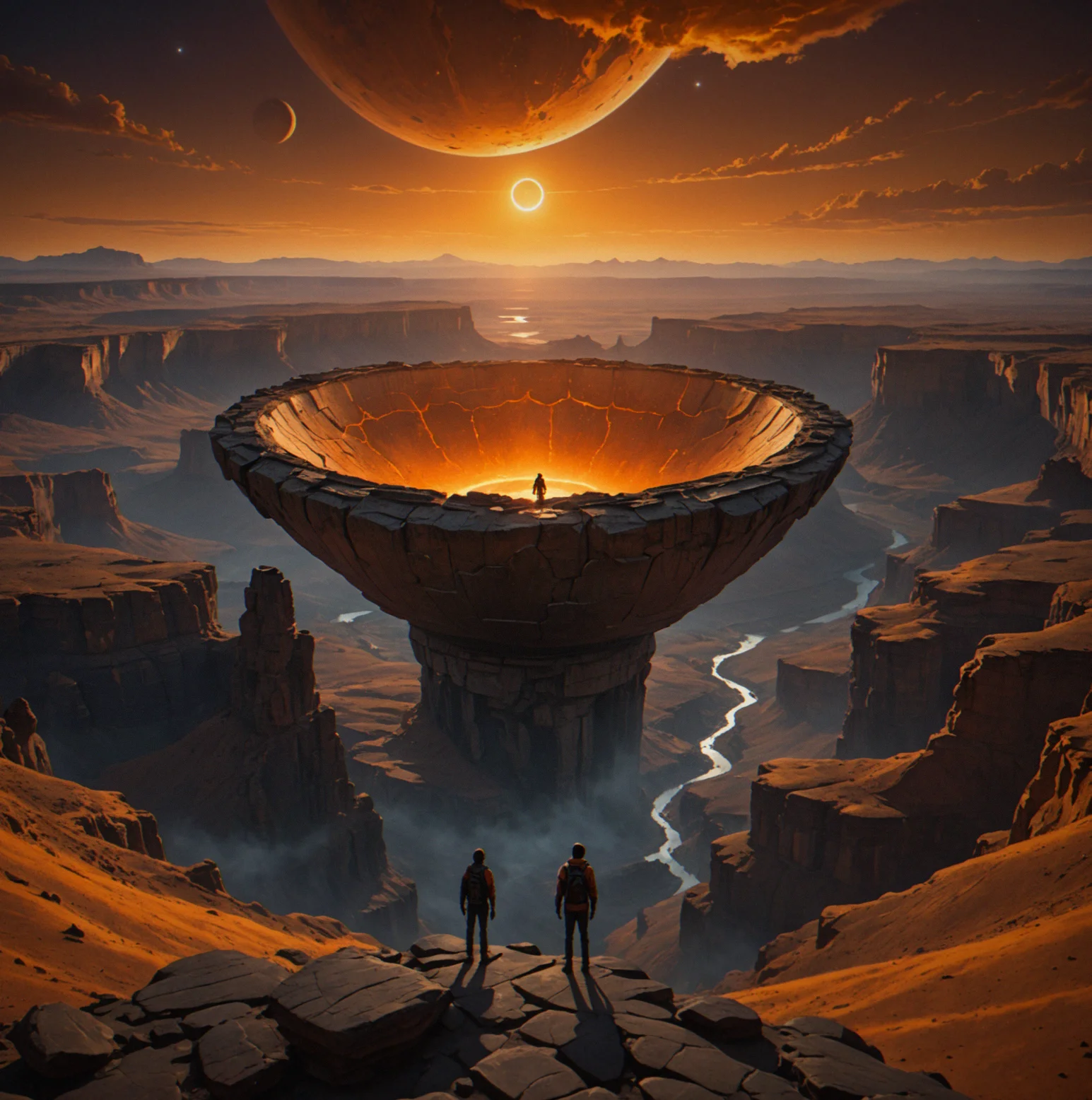
A massive stone bowl carved into the landscape, layered cliffs glowing orange in the fading light with a single person standing in the middle

You feel how huge everything is when you're standing alone in it.

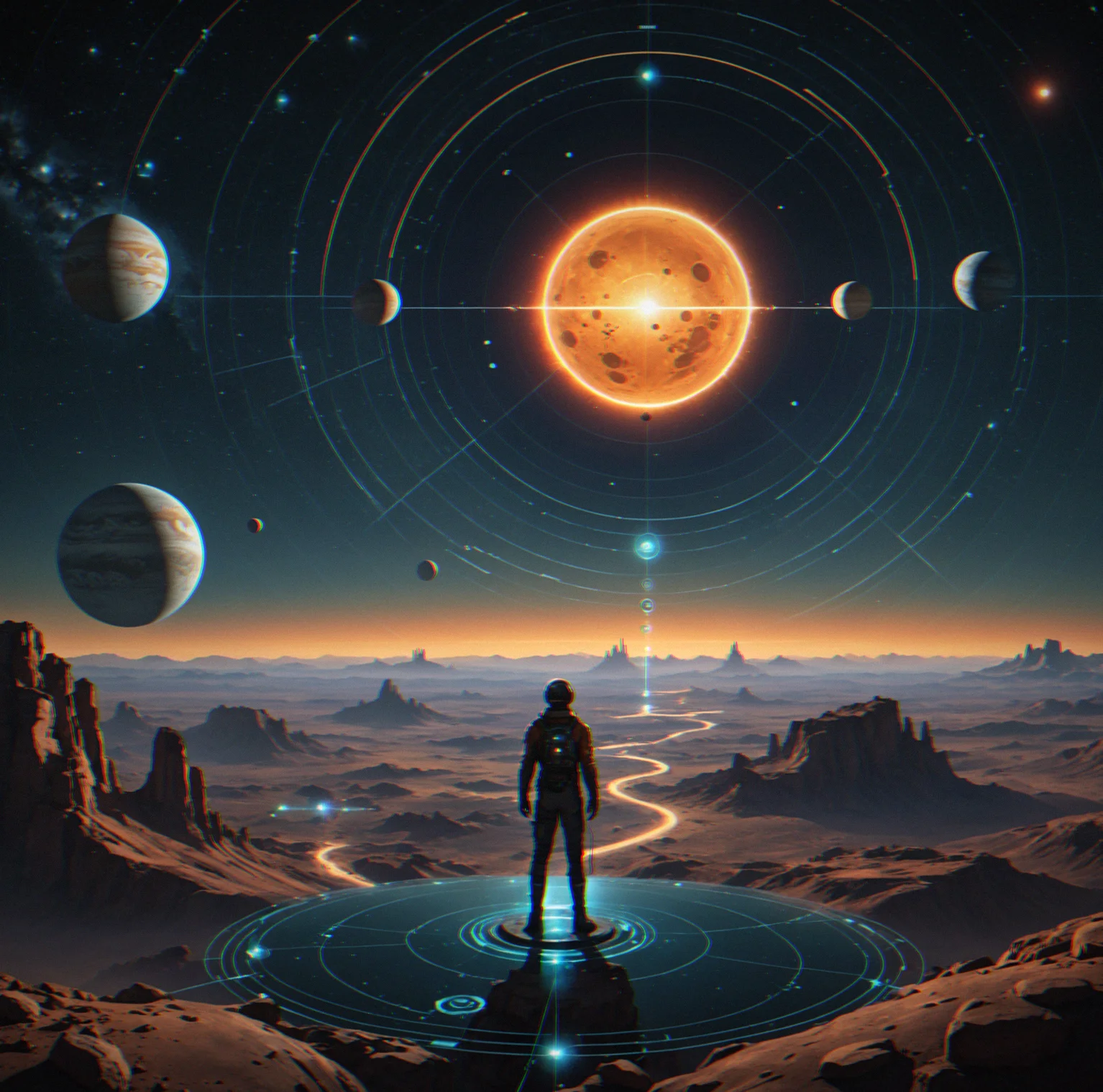
A map showing connected planets and moons with glowing lines between them and beacon markers placed across the network

You decide where to go next.

What sets WideVista apart

A space exploration game that's really about discovery. Not survival, not combat. Every system is built around that one thing—making you think and observe.

Beacon restoration as core gameplay

You find beacons that have gone dark across the planetary surface and get them working again. Each one you restore gives you navigation data and opens up new routes to explore. No fighting, no waiting for timers to tick down. It's just steady, quiet work. Recovery and discovery.

Procedural worlds with handcrafted intent

The generation is procedural, so you get real geological variety across all six bodies you can visit. But the landmarks and beacons aren't scattered randomly—someone placed them with care. You're not just wandering. You're reading something that was designed for you to find.

Non-linear orbital navigation

You decide the route. Visit the planets in whatever order appeals to you. Skip some entirely if that's what you want. The game doesn't punish you for not following a set path and honestly, that freedom to choose matters.

Scale that contextualizes solitude

Terrain rises somewhere between 400 and 800 meters above where you land. You're only about 2 meters tall. Stand under a natural arch or at the base of a canyon wall and you really feel it—the weight of all that rock, the enormity of what you're exploring.

Environmental storytelling without exposition

Erosion patterns tell you something about what happened to a planet. Geological formations hint at where other explorers might have gone. The landscape communicates through rock layers and mineral deposits and how everything relates to everything else.

Contemplative pacing by design

There's no reason to hurry. No progress bars, no skill trees, no timer counting down. Most people finish in somewhere between 8 and 14 hours, moving at whatever pace feels right to them. The game actually rewards you for slowing down and paying attention.

For players of Outer Wilds, Journey, Firewatch

If those games stuck with you—if you remember how quiet and powerful they felt—WideVista gets what you're looking for. Atmosphere. Visual discovery. That moment when you finally understand a world because you've explored it. That's what matters here.
Three things WideVista actually does

No filler. Just what separates this game from everything else out there.

Beacon restoration replaces combat

You're out there finding inactive beacons scattered across six different planets and bringing them back online. Each one you restore opens up new orbital routes and hands you navigation data. There's no combat, no timers counting down, no creatures hunting you. It's purely the act of finding things and understanding where they fit.

Scale that dominates the screen

The terrain towers above you. We're talking somewhere between 400 and 800 meters for most peaks. You're only about 2 meters tall by comparison. Each planet has five major landmakr clusters scattered across it. When you look out at a vista, you're seeing roughly 5 kilometers in any direction. You're not the center of this place. You're just moving through it.

You choose the route, always

Six planets. Go to them in whatever oredr feels right. You don't have to follow a path or unlock them one at a time. Skip entire sections if you want. The game just responds to what you actually do.

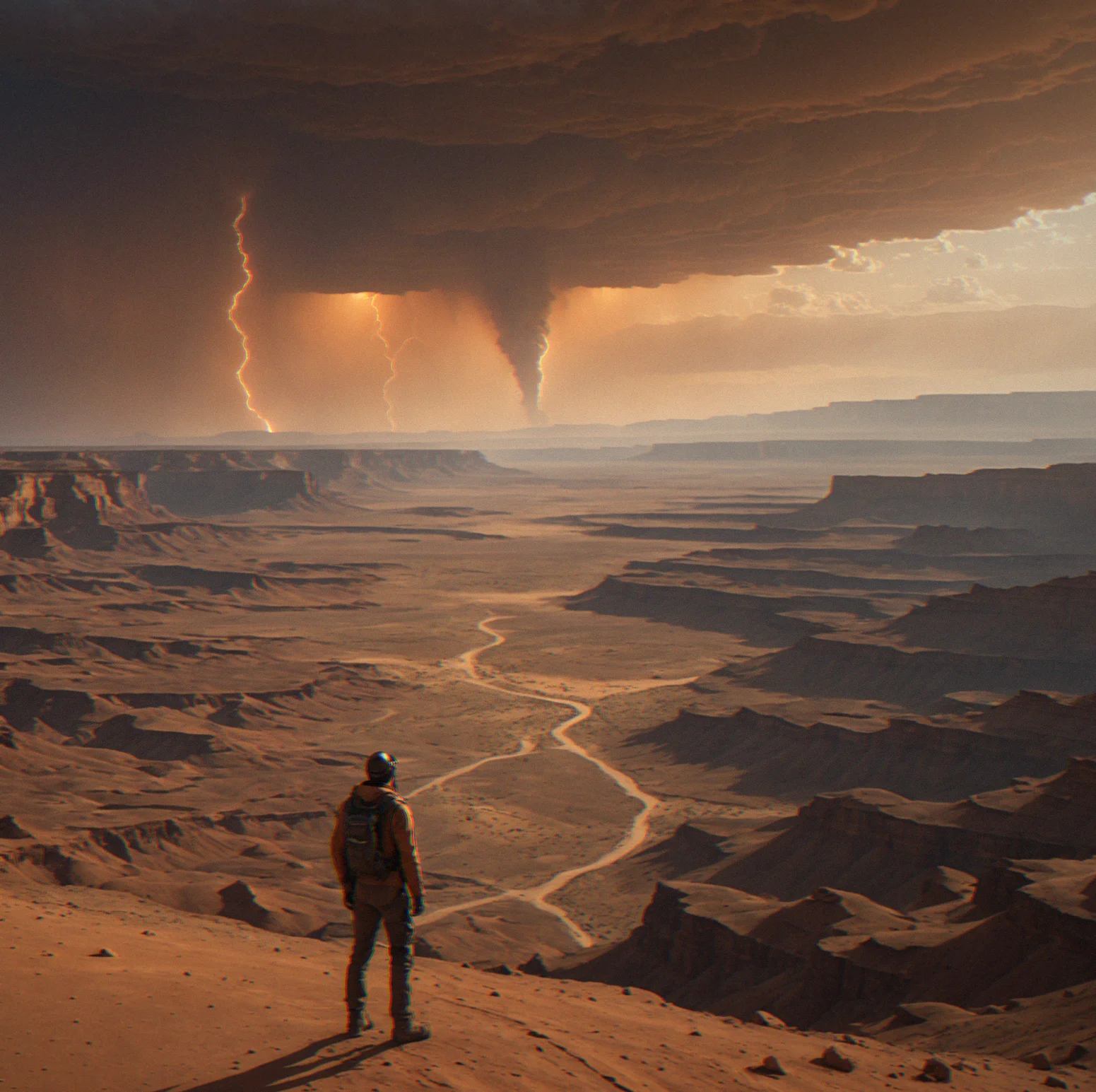
A solitary explorer stands on a rust-colored plateau as a distant dust storm approaches across a barren landscape, with layered canyon walls visible in soft amber light
1
DESIGN PHILOSOPHY

Atmosphere as the primary mechanic

WideVista doesn't treat atmosphere like window dressing. It's the actual system that pulls you in. Every visual decision matters — how the light sits at different times, how thick the particles get, the grain of the rock surface. All of it communicates something about the planet's geology and what the weather's doing. The game doesn't spell it out for you. Instead you figure it out by paying attention. A rust-colored dust storm rolling in from the horizon tells you something. The beacon's surface, weathered and scarred, shows you it's been off for a long time. Look at the layers in a canyon wall and you're seeing orbital history written in stone.

The pacing is built into the landscape itself. You're walking across these massive vistas, maybe a kilometer or more, at a normal pace. No dash button. No speed boost. That forces the world to open up slowly, which means you actually notice things. Something that looked tiny from far away becomes this towering structure as you get closer. Quiet dominates out there. You hear your own footsteps and the steady hum of your suit running and sometimes wind moving through the rock formations. That's not accidental. You can't think deeply if everything's screaming for your attention.

Environmental narration through geology

The rocks and erosion patterns and mineral colors tell you what happened here. There's no quest log. No markers pointing you anywhere. Just landscape that speaks if you're willing to listen.

Silence as a compositional choice

The sound design leans into the emptiness of it all. Your footsteps become the rhythm. Wind bounces around inside canyons. There's no background music while you're exploring, which makes every small sound feel bigger.

Visual discovery without guidance systems

No compass. No minimap cluttering the screen. You navigate by remembering what landmarks look like and using the stars. The more you walk around, the better you understand where you actually are.

A beacon structure stands silhouetted against a distant star, rising up from the edge of a plateau with canyon walls layered out across the horizon behind it

A beacon structure stands silhouetted against a distant star, rising up from the edge of a plateau with canyon walls layered out across the horizon behind it

An explorer working through a narrow ravine between massive stone formations, the walls so close together that the sky only shows as a thin line way up above

An explorer working through a narrow ravine between massive stone formations, the walls so close together that the sky only shows as a thin line way up above

Orbital map glowing on a display, nodes connected by trajectory lines showing where you can actually go across the system

Orbital map glowing on a display, nodes connected by trajectory lines showing where you can actually go across the system

A huge natural amphitheater carved out of rust-colored stone, one figure standing alone in the center and looking impossibly small against all that space (the kind of view that stops you in your tracks)

A huge natural amphitheater carved out of rust-colored stone, one figure standing alone in the center and looking impossibly small against all that space (the kind of view that stops you in your tracks)

Two moons coming up over a crystalline landscape as it gets dark, shadows stretching long across mineral formations with a beacon glowing somewhere in the distance

Two moons coming up over a crystalline landscape as it gets dark, shadows stretching long across mineral formations with a beacon glowing somewhere in the distance

An explorer standing at the rim of an impact crater, looking down at the geological layers exposed on the wall dropping hundreds of meters below

An explorer standing at the rim of an impact crater, looking down at the geological layers exposed on the wall dropping hundreds of meters below

A storm system visible from up in orbit, dust clouds swirling across the planetary surface with several beacon locations marked down below

A storm system visible from up in orbit, dust clouds swirling across the planetary surface with several beacon locations marked down below

COMMON QUESTIONS

Things people actually want to know

WideVista isn't a survival game or a combat sim. Players often ask about mechanics that simply don't exist here—and that's usually by design.

No enemies. No timers draining your resources. No environmental hazards waiting to kill you. The whole thing is just finding inactive beacons and turning them back on. You explore whenever you want, at whatever speed feels right.

Between 8 and 14 hours for most people, though it depends on how much time you spend just looking around. There's no set pace. Someone might spend two hours on one planet studying how everything connects. Someone else moves through faster. Nothing forces you into a rhythm.

Navigation works through landmarks and where you are relative to the planet. No minimap. No waypoint markers. You orient yourself the way real explorers do—by remembering terrain and using celestial reference points. It feels strange at first but clicks pretty quickly after your first landing.

Procedurally generated details shift between runs. Craters, lava flows, crystal patches all vary. The major structures though—where beacons sit, the big canyon systems, unusual geological formations—those are placed intentionally. Worlds feel both fresh and carefully designed.

Stay in the loop on beacon discoveries and new routes.

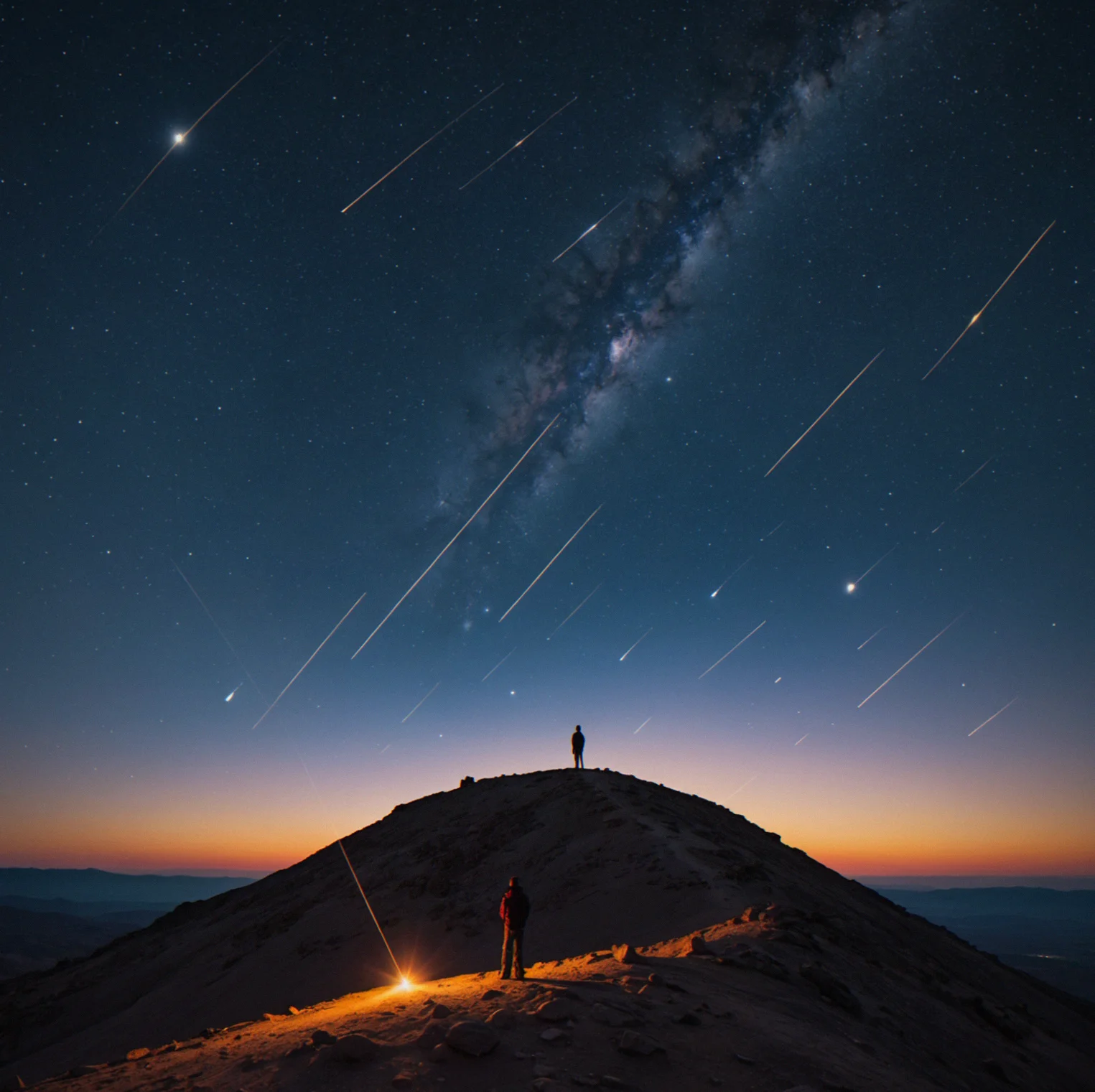
A beacon glowing in twilight with orbital paths showing as faint lines across the stars above

We drop occasional updates about WideVista—new landscape features, navigation improvements, and interesting finds from the orbital network. No spam, no marketing pitches. Just the real work of exploration, sent to your inbox every few weeks when we have something worth sharing.